Before I wax lyrical can I thank Iain Macmillan yet again for his wonderful genorosity.


Before I wax lyrical can I thank Iain Macmillan yet again for his wonderful genorosity.


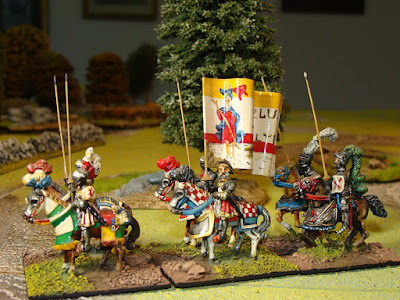
And a heads up to any collectors with some spare cash, well quite a bit. There are some more Gilder mounted french gendarmes on E Bay for sale. Im not certain if they are Hinto Hunt or Mini Figs, but its matterless as they are brilliant.


Basically the book contained potted histories of sculptors, collectors and people involved in model soldiers. Contained in the book amongst the potted biograpies of various rich Europeans are mentions of wargamers who would make their names in the hobby.
Interestingly the name Peter Gilder pops up several times and I thought in the interests of completeness I should include what was written about Peter and his collection;
Peter Gilder believes that beautifully painted models need an appropriate setting.He is especially skilful in making naturalistic terrains and employs many types of house of the period appropriate to the campaign in progress. His collection,comprising over 3,000 Stadden, Gammage [Russell] and Hinton models, all of the Napoleonic period, is delightfully painted and serves not only its primary purpose but at the same time is a delight to the eye.
The question I keep asking myself is what happened to this specific collection? Stadden was just making his reputation in the late 1960's and early 1970's but his horses were already beautiful sculpts and I cant remember ever seeing figures owned by Peter that were obviously Stadden ones.


If anyone would like a copy of the great mans rules, just e mail me and I will send them a copy. Although it isnt my period I was always interested in the game and how everyone who ever played it, praised how good it was, so thanks again Guy and hopefully some gamer will enjoy what Gilder created.

Guy also sent me a copy of what can loosely described as a set of ancient wargaming rules by a PG, PE and GB. As they were with the Sudan Campaign rules the assumption is they are by Gilder. Again if anyone wants a copy just e mail me.
.jpg)
The figures? I believe are Mini Figs from their S range. Personally I love them and am envious of the person who will eventually own them. The current price £98 and counting. Not bad for a figure that must be about 50+ years old and testament to the artistry of Gilder.
.jpg)
.jpg)
.jpg)
.jpg)
These French Empress dragoons were advertised for sale on E Bay a couple of weeks ago as being from Peter Gilder's early French army. I was tempted even though I have no Napoleonic armies anymore. Luckily I didn't bid on them and the went for over £100. The figures are Hinton Hunt's and I know that Gilder when he was creating his early Napoleonic armies used a lot of Hunt figures, so perhaps they were painted and owned by the great man. I would like to think so
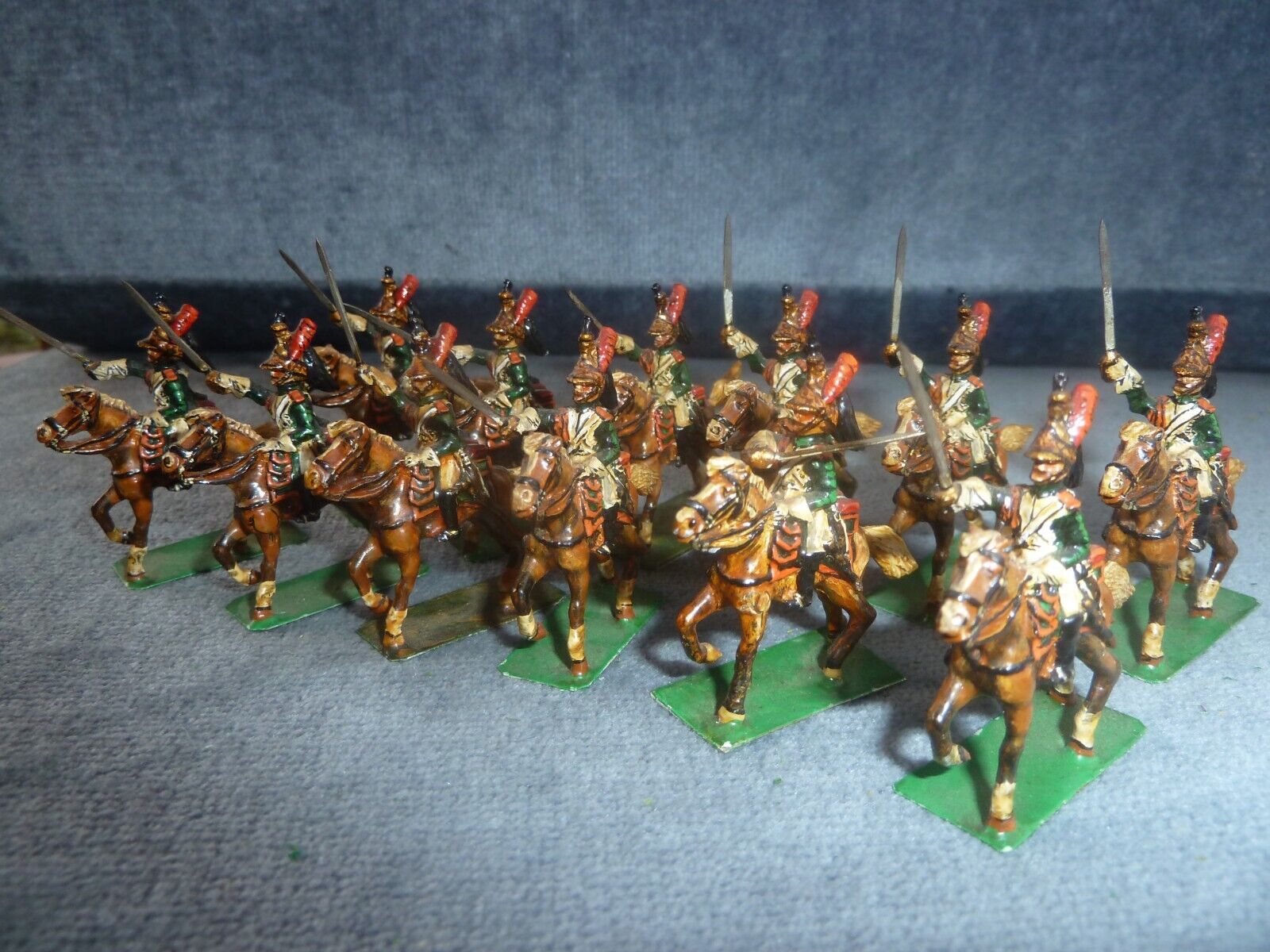
I know Gilder in his haste to get its on the table would avoid painting his horses stomachs if he could get away with it. While plodders like me were meticulously painting and painting again every part of our figures, Gilder had the foresight and confidence to paint only where you can see. Be warned though, Gilder would also completely paint some of his cavalry regiments as the whim took him.
When Im looking for his work, I usually start by checking for replaced sabers and bayonets, then I check how the horses have been painted, are they wiped off oils etc. Hardly a definitive set of checks given how many painters who worked for him would assiduously copy his brilliant style. i wish I could a definitive answer to how to spot Gilder's work, but it is very, very difficult if not impossible.
I know that Ian Hinds of Hind's secondhand figures is currently selling very early figures painted by Gilder, knowing Ian Im certain he will have some sort of provable providence. Anyway, great to add a liitle more to the blog.


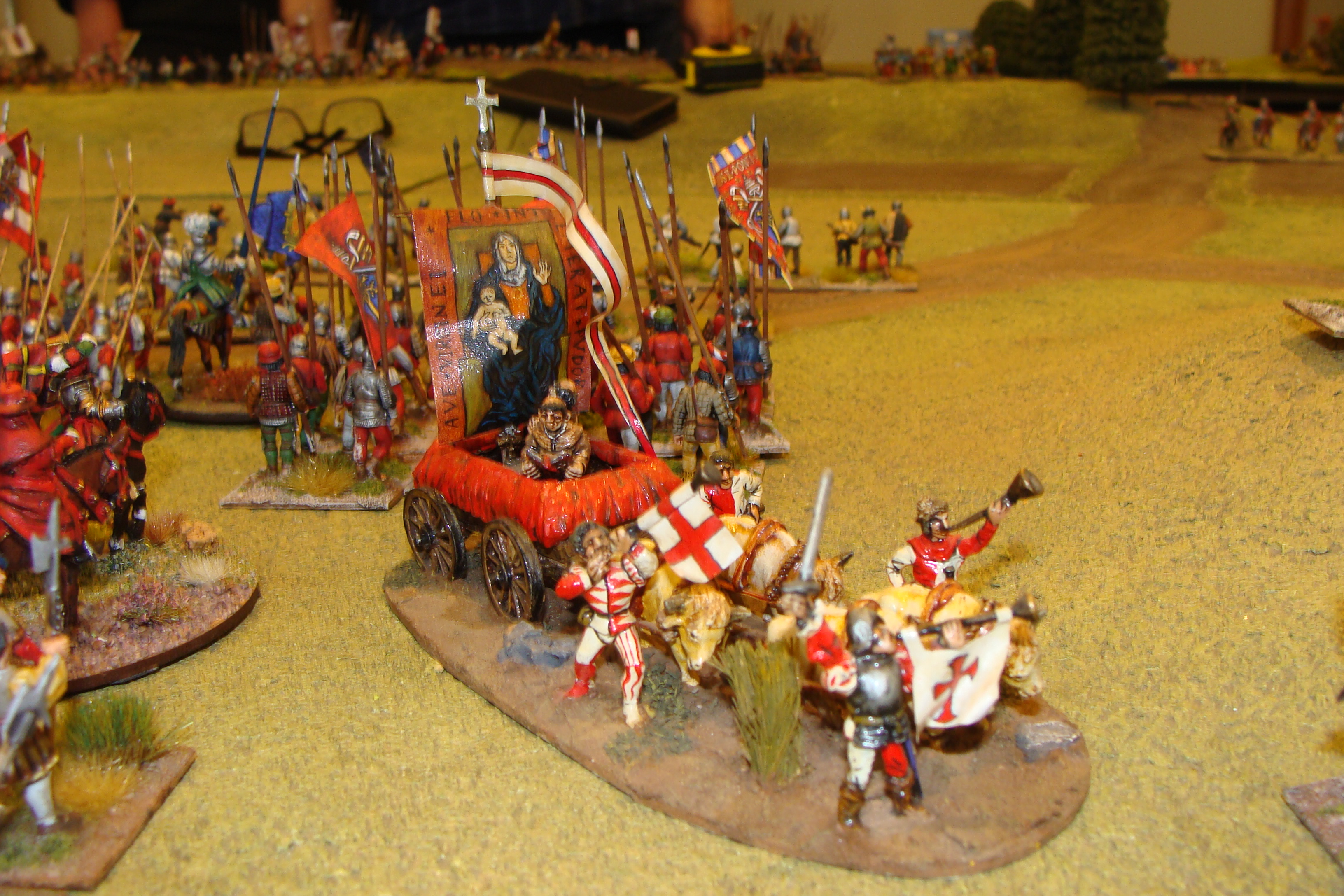

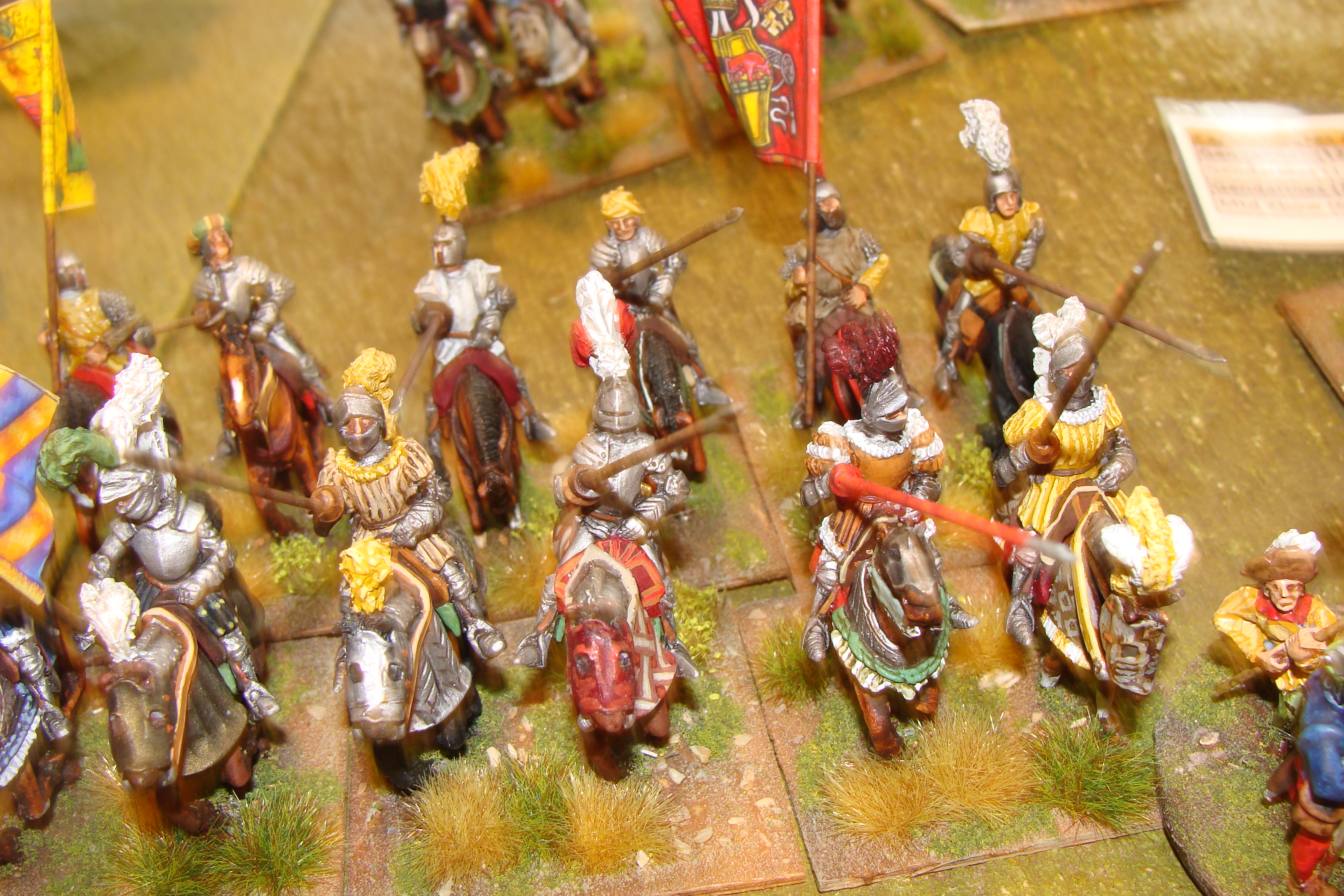


Looking around this table tonight shows how much one person can affect our lives. We are here to celebrate the life of Donald Featherstone and his role in making wargaming the hobby it is today.
But of course, there were other
wonderful characters who helped create the hobby that we all know and love,
Charles Grant, Brigadier Peter Young, Charlie Wesencraft, Jack Scruby, et al.
However, there is one man who
sadly many younger wargamers know little if anything about the late PETER
GILDER.
So, what do we know of the
man?
PETER WILCOX GILDER was born
on the 12th October 1930, his birth was registered in
Luton.
He obtained an RAF apprenticeship
when 15 years old and was posted to their training camp at Halton in 1945.
Peter was clearly a good student
because he qualified to be sent to RAF Cranwell to train as a pilot. He flew
single seater jets and was also involved in some small way in the Berlin
Airlifts, probably selling nylons to the ladies or some such.
After leaving the RAF he became an
inspector for BAE Systems at Brough near Hull.
I will let the great man Donald
Featherstone reveal how Gilder became involved in wargaming;
DF; How and when did you
first become involved in wargaming?
PG; I have always been
involved in sport of some kind which took up a good deal of my time in 1962
when I was getting on a bit I broke my leg cycle racing and had been in plaster
16 weeks.
At my age that more
or less finished me for the season and I found that I had so much time on my
hands that I had to do something with. It was at this time you had written an
article in the SHE women’s magazine which my wife used to get. It mentioned
your newly published book WARGAMES and something sort of clicked.
Never one to let the grass grow
under his feet Peter Gilder advertised in the Military Modelling looking for
wargamers in the Hull area. The advertisement was a huge success and amongst
the attendees were people who in time became wargaming household names such as Keith
Rotherham, Barry Manchester, Mike Sharp, John Braithwaite and Bill Lamming
and later Phil Robinson and Harry Harrison.
In true Gilder style, Peter
badgered Lamming into creating smaller scale soldiers, the first being a
one-piece French hussar in mirliton, probably the first figure of the
later Lamming Miniatures figure range. I suspect Peter may have studied how
Bill Lamming sculpted his figures, but that is pure conjecture.
Peter Gilder had moved into Hull
and lived in a small flat above a fish and chip shop, which was rather
appropriate as he was now employed as a salesman for the Alberken Pie Heating
Company.
It was during this period that
veteran wargamer John Tilson was introduced to Gilder by Bill Lamming. Both men
were members of the British Model Soldier Society and shared an interest in
Britain’s. John remembered that Peter was a very generous soul who was keen to
encourage would be wargamers. A typical Gilder trait.
John was subsequently
invited to a small flat above the fish shop in Hull where he saw a table laid
out with painted toy soldiers and well sculpted terrain. He would return to the
flat frequently to wargame with Peter. Strangely he remembered never winning
a game against the great man, shades of Brigadier Young I think.
Somehow Gilder convinced the
owners of Alberken to diversify into casting and selling toy soldiers created
by him. Now bearing in mind that Gilder was still learning how to create toy
soldiers one has to wonder at his confidence.
The initial Alberken range
stretched to about 50 figures which were sold in beautiful red boxes, ready
painted by Gilder. They were a huge success.
These original Gilder figures were
approximately 22m tall, static in pose, lacking in detail and rather flat.
These original figures bore a very strong resemblance to the newly released
range by Marcus Hinton. Peter was later threatened with copyright law by Hinton
which thankfully came to nothing
In 1965, one of the owners of
Alberken was tragically killed in a road accident and the sole remaining owner
decided to sell up.
The buyer was NEVILLE DICKENSON
from Southampton who had become interested in wargaming after knocking on the
door of Donald Featherstone’s home in order to buy a copy of his book WARGAMES.
Dickenson wanted to expand the
Alberken range and initially asked Peter Gilder to continue as a designer.
Advertisements were circulated in the Wargamers Digest announcing the new
partnership and their intention to produce well sculpted and painted wargaming
figures, apparently orders began to pile up…..
As Dickenson recalled, ‘I
WAITED AND WAITED FOR THE NEW MASTERS BUT I NEVER GOT THEM.’
Dickenson changed the name of the
company to Miniature Figurines and employed the talents of Dick Higgs, and the
rest was wargaming history as we say.
As for Gilder?
In 1965 Peter created his first
representation of the field of Waterloo for Featherstone’s Military Festival in
London. He not only supplied the terrain but also the 2000 painted figures and
the rules for the re-enactment.
The French won the day, naturally.
Peter was always a Boney supporter.
His fame as a creator of beautiful
wargaming terrain coupled to thousands of figures was born.
It was clear that Peter had the
gift of the gab, hence his time as a pie machine salesman and wargaming went
mainstream courtesy of the wonderful television series, CALLAN.
For the youngsters in the room,
Callan was an anti-hero, a killer and a man with the good taste to be a
wargamer.
But why is it that wargamers were
always portrayed as killers and nasty types?
In 1967, Armchair Theatre aired
the pilot of a series called A MAGNUM FOR SCHNEIDER, where Callan,
the antihero talks his way into the house of a foreign spy who has a table
covered with toy soldiers [Peter’s] marching across a rudimentary terrain.
Naturally Callan uses his
wargaming knowledge to charm his victim, which he duly shot dead,…. no saving
throw for that poor bugger
In the later very successful
series the battles displayed contained beautifully painted soldiers moving
across a basic terrain. Wargaming had arrived into the public
consciousness.
By 1974 Peter, his figures and
terrain were a key part of the first Callan film. Two battles were portrayed,
Talavera and Gettysburg, both were typical Gilder in their presentation.
Sculptured terrain and beautifully painted figures, this at a time when I was
fighting across a piece of tatty chipboard with chalk roads, hills and rivers
using the Airfix Foreign Legion as French Napoleonic’s.
For a fevered teenager, all my
birthdays had come at once as I sat in the cinema to watch educated men and
spies to boot play wargames while watched by the beautiful and sophisticated [
she drank Cinzano] Catherine Schell admiring the tactical skills of Callan
and wondering what he looked like in his nylon y fronts.
Other successes followed for
Peter, as his terrain and figures were shown in various wargaming and military
history books including Grant’s Napoleonic Wargames and Chandler’s Art of
Warfare. In this book, another version of Gilder’s now famous Waterloo terrain
was shown.
I know of four versions that
he created and then sold or gave away, each a masterpiece in their own right.
Apparently for one Waterloo
display in Paris, Peter ‘borrowed’ a lovingly painted Brunswick Corps from one
of the Hull members. It was never returned, and when asked about its
whereabouts years later Peter admitted he had inadvertently sold it with the
Waterloo terrain to some French collector.
In 1970 Peter framed the
term In the Grand Manner, originally a series of articles by him
for the wargame’s magazine Miniature Warfare. The articles were typical of
Gilder and showed wargamers how to make wonderful terrain like him, well that
was the theory anyway.
My attempts using papier
mache, poster paint and privet looked like regurgitated cat sick.
The early 1970’s was another
important time for wargaming as Peter and Frank Hinchliffe who wanted to dip
his toes in the wargaming phenomena created Hinchliffe Figures.
By 1972 the company produced a
beautiful catalogue which included articles by Peter on how to paint the
figures. Not only quickly but well.
This at a time when all wargamers
were happy to slap a bright pink, usually a Humbrol oil-based affair on the
hands and head of their figures and stand back and admire them.
But not Peter, who was talking of
washes of Humbrol leather over a white undercoat. Try it, even now the effect
is amazing.
And then there were his
horses.
Those famous beautifully painted
horses, for which he suggested the following;
Time to now look at
the problem of horses, although of course this isn’t really a problem at all
and it is far easier to achieve a well painted horse than to paint a
first-class figure. Using Humbrol RUST, cover the whole
horse, remembering the previous notes regarding cleaning and undercoating.
When it is well covered and before it is dry take your brush, clean it, dip it
in the thinners and carefully remove from the highlights of the horse.
1978 was an important year for
wargamers, well certainly those that could watch Tyne Tees Television. The
legendary BATTLEGROUND series was series of six programmes presented by Edward
Woodward [aka Callan] of wargamers refighting famous battles from history.What
some wargamers might not know but it was Charlie Wesencraft who was the
instigator of the series.
Charlie remembered the historic
times;
I was asked by North
Tyneside Council to do a series of six historical wargames for them. [Imagine
that nowadays] On the first night, two ladies from the local television company
turned up and asked me about wargaming in general. Much later I received a telephone
call out of the blue asking if I could write a series of six scripts of battles
fought by famous military personalities, originally, I wanted to portray
Cannae and Hannibal but the producer said very few people would know who he
was. In the end I got John
Braithwaite to help
me prepare the battles. It was decided to record a pilot battle. The producer
was a vicar’s daughter who swore like a trooper, I was
appalled.
A young
wargamer called Peter Gilder was supposed to do the first battle, but the nerves
got the better of him, he had an anxiety attack and fainted. Poor Peter ended
up being taken to hospital. So, me and John staged the pilot game. The producer
wanted us to throw a six to hit a gun, but neither John or I could, and that
vicar’s daughter started to turn the air blue,
so, in the end we
cheated a bit. The worst thing was when she insisted on having smoke blow
across the battlefield, hiding all the beautiful figures.
Of course, Peter recovered from
his nerves and played an integral part in the six programmes.
Who can forget his appearance
against John Braithwaite in their refight of Waterloo. Gilder’s sledging was
merciless and it was then I realised that not everything that was needed to win
a wargame was contained in the set of rules. Against Paddy Griffiths, his
tactics didn’t work, and Dr Griffiths had the measure of Peter. But what
beautiful games that have stood the test of time.
As an aside, in the first programme
featuring the Battle of Edgehill fought between Duncan Macfarlane’s gorgeous
Royalists and John Tilson’s carefully painted Parliamentarians, the said
Parliamentarians were stolen from the boot of John’s car a week later and never
seen again.
Like war, sometimes fate plays a
part in the differences between success and abject failure.
The year 1983 was a seminal
year for wargaming and was when Gilder, the late Duncan Macfarlane and a shady
chap called Stan Gee were having a boozy lunch in a salubrious pub in London
that the future of modern wargaming was assured .
Duncan described Stan Gee as
a spiv like figure with mannerisms similar to George Cole who owned a
loss-making car magazine of limited circulation.
Gilder was bemoaning the fact that
there was no decent wargaming magazines since the closure of the Battle
magazine, whilst Gee was mourning his ownership of a loss-making car magazine
and Duncan well he was simply enjoying his beer until Gilder allegedly
said to him;
‘ you know about
publishing Duncan, don’t you?
Duncan had been a librarian at the
Leo Schultz School in Hull and knew one end of a book from another.
So, Duncan’s
encyclopaedic knowledge of publishing, Gee’s business acumen and Peter Gilder’s
beautiful figures, wargaming was not only saved but
flourished. Miniature Wargames was born.
A professionally produced wargames
magazine crammed full of wonderful articles and best of all beautifully
produced colour photographs of Gilder’s figures. I defy any wargamer who lived
through that time not to have been inspired by the figures of Peter Gilder.
It was only much later that I
discovered that Peter Gilder wasn’t the sole creator of his wonderful and
colourful armies, and why would he when he was surrounded by some of the most
talented figure painters ever known.
Doug Mason, the man who created
the wonderful Zastrow Cuirassiers and many, many others.
Mark Allen, Dave Thomas, Phil
Robinson, Mark Moon the late great Ian Smith, all were taught by Peter who was
keen for them to share his tips and knowledge and in return they gladly
painted for him. Gilder would pay for these units with Hinchliffe castings.
I was lucky enough to meet and
befriend one such painter, the great Tony Runkee who explained how he had met
Gilder at the Hull club and how they had quickly become friends.
After the first
meeting Peter and I would meet at the club, and after a couple of meetings
Peter me around his house to show me some of the figures he’d been working on.
This was before Milliput, he made his figure from a wire
armature and solder.
I remember watching him making one Napoleonic soldier in a greatcoat and he
built the coat, which was loose and open using a piece of wire and solder, for
its time it looked great.
So how can you tell an original
painted figure by Peter from one of his many disciples? And there’s the rub. I
know that Peter in an effort to get cavalry on the table as quickly as possible
would sometimes not paint the underside of the horse, leaving it as bare metal
or undercoat, but apart from that, I don’t think anyone can be sure.
So finally, [ thank God] Peter
Gilder’s Wargames Holiday Centre. The original mecca for wargamers of a certain
age and still the hall of dreams for many.
I’ll allow Tony Runkee describe
what happened when Peter bought an old doctors surgery;
Peter bought a place
at Thornton le Dale, and I helped him set it up his wargames room, doing the
electric wiring and the like. Peter and I then started making the terrain
boards. We didn’t have the pink insulation board materiel then, so Peter and I
would cut up big sheets of fibre board and carve them to make the hills.
That’s when I was
introduced to the rubberised hair method of making trees and hedges. A lot of
the buildings were originally made of solid blocks of wood with roofs and windows
added. I brought Peter a load of rubber gaskets from the Leyland A68 engines
which he used as hedges that were fixed to the boards. The centre was a great
place.